
AI Agent UX Patterns
Ongoing UX research distilled from Friendly Agent, Conversation First Design, Relationship Design, and other agent-interface prototypes.
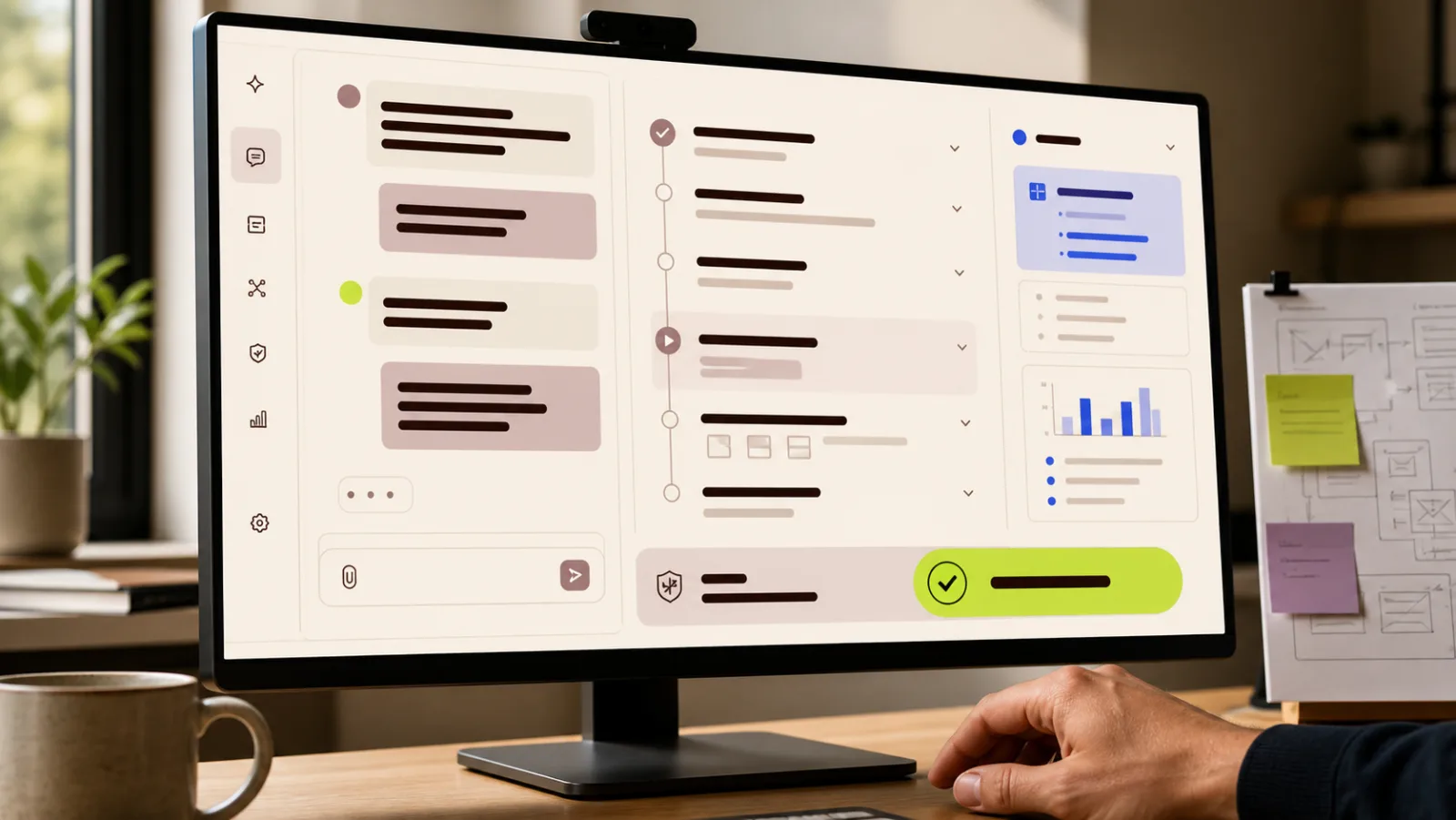
What it helps with
A chat box does not explain a plan, partial progress, a request for approval, or how to recover after a multi-step action fails. Those moments need interface patterns of their own.
What was built
The current evidence is spread across adjacent prototypes and skills: Friendly Agent’s staged mock-up, Conversation First Design experiments, and Relationship Design’s memory and trust work. There is no standalone published pattern library yet, so this case presents the material as active research rather than a finished catalogue.
What made it different
The research connects interaction design with the practical control points of agentic systems. Its contribution is the repeated observation that state, permission, and recovery have to be designed into the everyday interface, not left in logs or hidden system behaviour.
Agent controls become useful when they appear at the moment a person needs to understand, approve, correct, or recover.
What it demonstrates
- Visible planning and task-state research
- Confirmation and recovery prototypes
- Progressive disclosure across adjacent product experiments